
// Industry playbook / 01

Agents that watch the line, reason on the spot, and act for manufacturing

Use cameras to catch defects, enforce PPE, and keep production lines moving with fewer manual inspections.

Industry playbook / 01 operations monitored by Thinking Stack vision agents
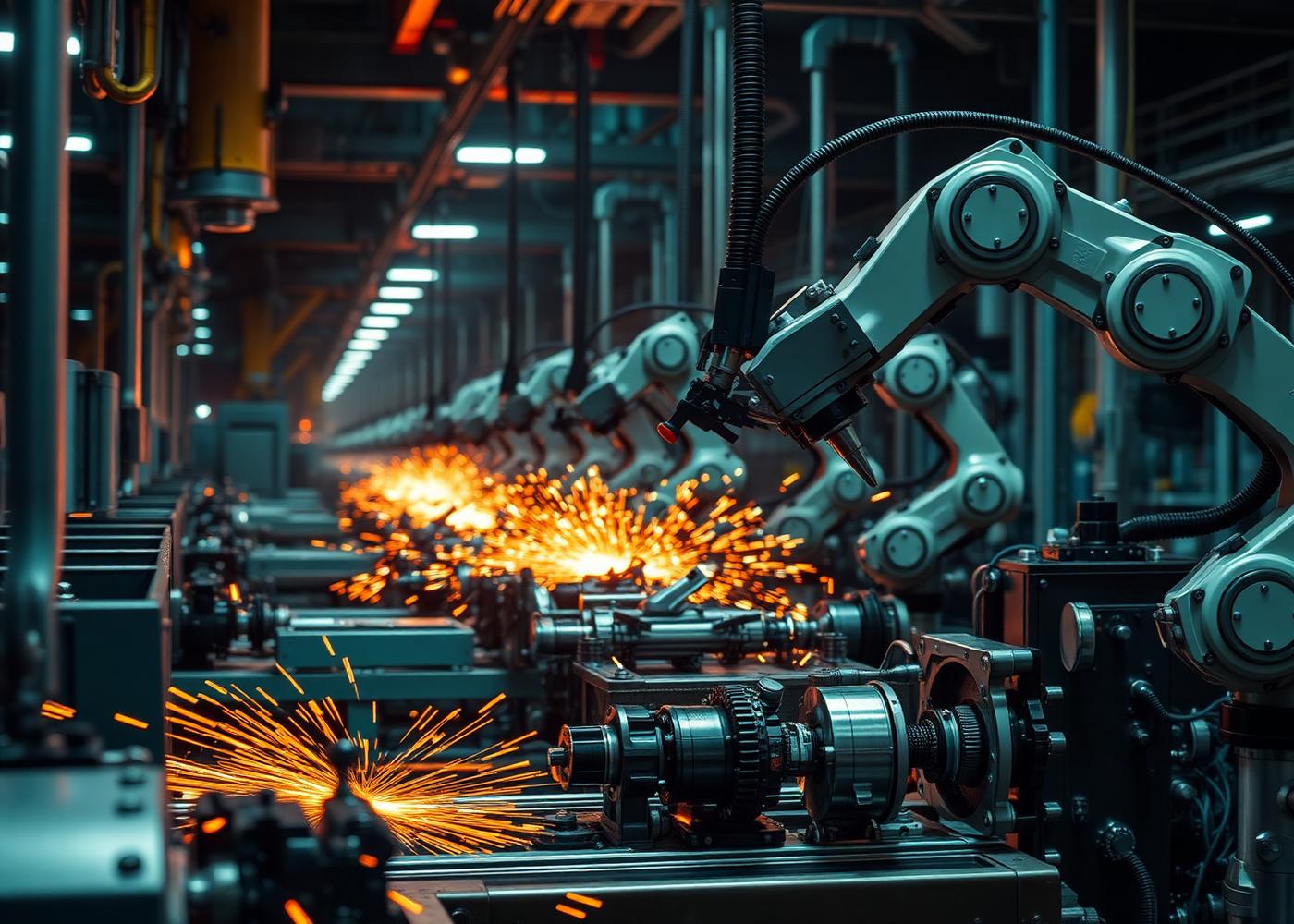
robot cell · cycle ok
weld spatter · flagged
Agents active
48.13° N / 11.58° E
Thinking StackPerceive · Reason · Act

Agents that move the value drivers your business runs on

From perception to action — the outcomes our agents are measured on.

Quality Control

FunctionKPIAI enhancement
Defect DetectionDefect RateAutomated visual inspection to identify and classify production defects in real time, reducing the defect rate.
Compliance and StandardsCompliance RateEnsure products meet quality standards and regulations through consistent monitoring.

Worker Safety and Ergonomics

FunctionKPIAI enhancement
Safety Compliance MonitoringWorkplace Accidents RateMonitor compliance with safety protocols to prevent accidents.
Ergonomic AssessmentEmployee Health Issues RateAnalyse worker movements to identify and mitigate ergonomic risks.

Operational Efficiency

FunctionKPIAI enhancement
Process OptimisationMachine Downtime ReductionMonitor equipment to predict and prevent failures.
Line BalancingProduction ThroughputOptimise production lines in real time for increased throughput.

Supply Chain and Inventory Management

FunctionKPIAI enhancement
Inventory AccuracyInventory Levels AccuracyReal-time tracking of materials and finished goods to improve inventory accuracy.
Supply Chain VisibilityOrder Fulfilment RateMonitor and manage the flow of goods through the supply chain to optimise fulfilment.

Environmental Sustainability

FunctionKPIAI enhancement
Waste ReductionWaste VolumeDifferentiate between materials for recycling, re-use or disposal, minimising waste.
Energy ConsumptionEnergy EfficiencyMonitor real-time occupancy and environmental conditions to cut consumption.

Why agents, here

Vision agents deployed across industry playbook / 01 sites

The manufacturing sector is headed towards digital transformation, where computer vision systems and AI-powered vision technologies lead the charge. These systems apply deep learning and computer vision models to decode visual information and automate production processes.

Applications range from quality control to predictive maintenance — enhancing manufacturing efficiency while minimising cost and human inspection error.

// Key applications

What the agents actually do

Defect detection & quality control

  • Automotive: paint imperfections, misalignment and surface roughness
  • Electronics: circuit board and semiconductor inspection with object tracking
  • Textiles: fabric texture and flaw detection against quality standards
  • Food: foreign-object and incorrect-packaging detection

Process automation and robotics

  • Precision assembly guided by real-time object detection
  • Pedestrian and forklift detection to prevent workplace injuries
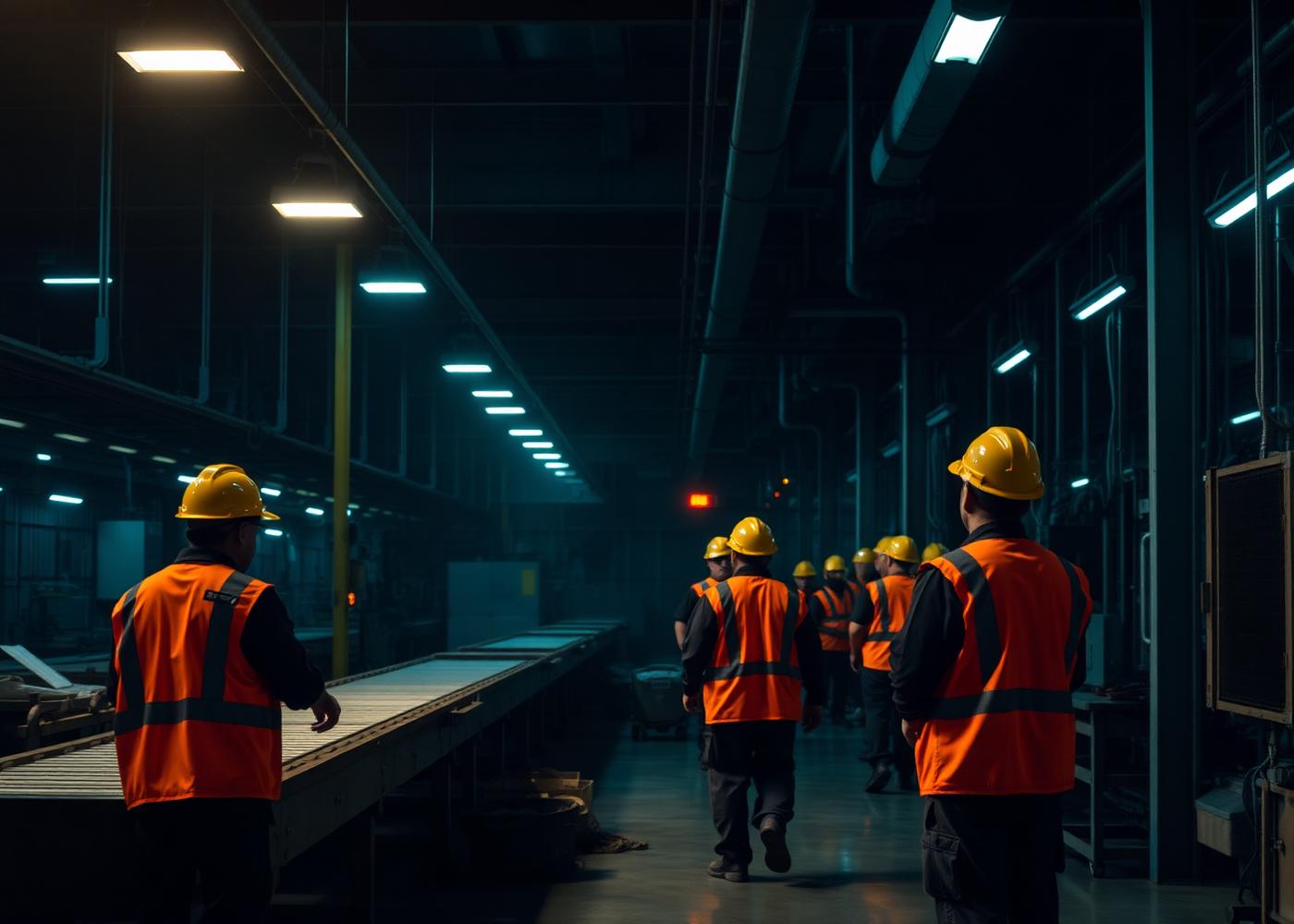
  • PPE compliance enforcement in hazardous operations

Predictive maintenance and equipment monitoring

  • Fuse camera and sensor data to inspect equipment wear
  • Detect anomalies in production equipment before failure
  • Reduce maintenance cost by preventing unplanned breakdowns

Inventory and supply chain optimisation

  • Real-time material and finished-goods availability tracking
  • Traffic density assessment across internal logistics
  • Avoid overstocking, spoilage and write-offs

// How the system works

From visual and passive data feeds to your system of record

  1. 01

    AI algorithms & deep learning for vision processing

    Deep learning models process video streams for intelligent detection of defects and anomalies, automating what were manual inspection tasks.

  2. 02

    Seamless integration with manufacturing processes

    Works with existing cameras, PLCs and MES. Compatible with robotic automation and autonomous vehicles on the floor.

  3. 03

    Real-time monitoring and actionable insights

    Sub-second alerts and dashboards deliver the information supervisors need to act, not just report after the shift.

40%

reduction in defects

25%

boost in production efficiency

30%

cost savings via predictive maintenance

// Case snapshots

Results in the field

AI-powered defect detection in automotive manufacturing

Challenge · A top automobile manufacturer struggled with manual inspection faults resulting in quality escapes.

  • 40% fewer defects with vision-based inspection
  • 20% rise in effective line utilisation
  • Higher production efficiency through automated inspection

Predictive maintenance in electronics

Challenge · Frequent equipment failures at a leading electronics manufacturer drove unplanned downtime.

  • 30% decrease in equipment downtime
  • Lower maintenance cost per unit produced
  • Improved competitiveness in a tight market

Start with a live demo on your own scenario

We'll map your KPIs to the agents that move them, then run a pilot on the cameras you already have.

Book a demo